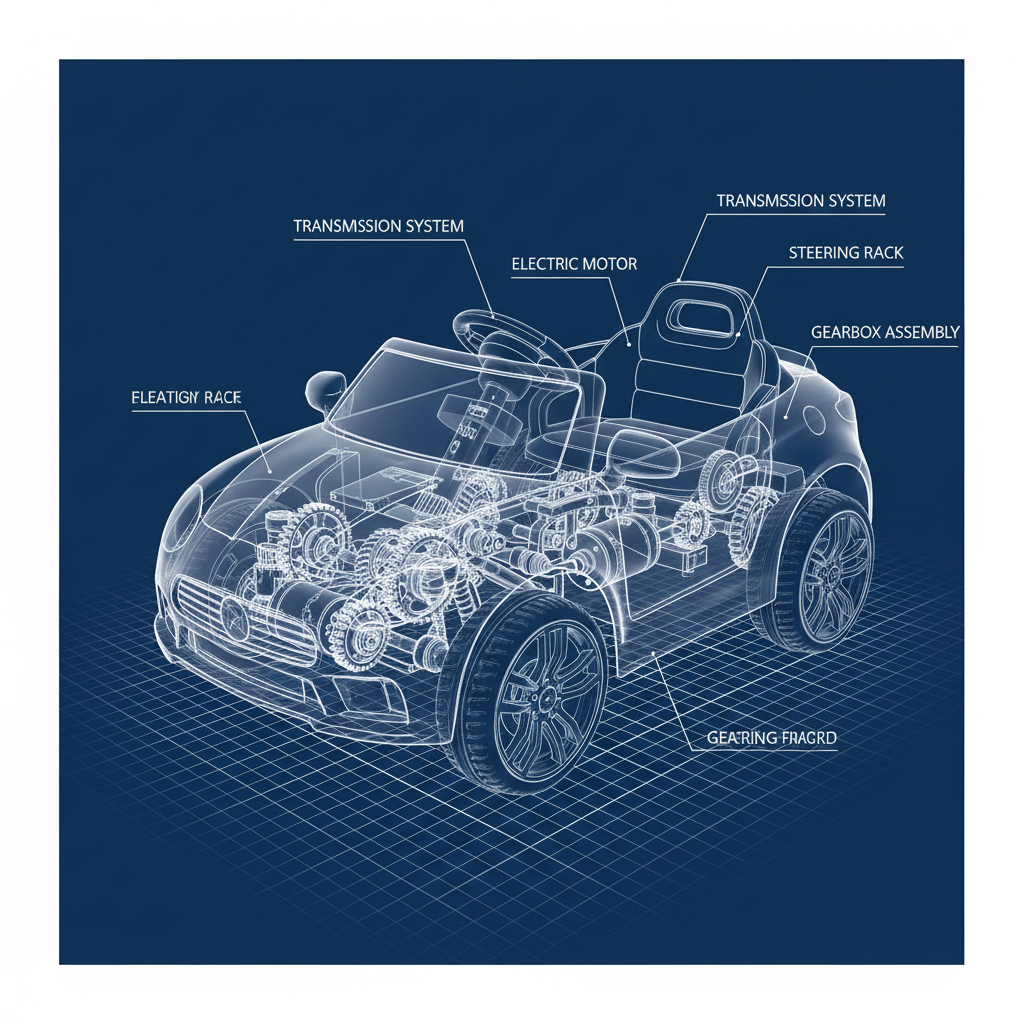
You know, these days everyone's talking about smart kids' electric cars with remote control. Seems like yesterday they were just little plastic things you pushed around, now they’ve got lights, sounds, even Bluetooth. To be honest, the demand’s gone through the roof. Everyone wants to give their kid a little taste of freedom, and a remote control for peace of mind. But it’s not all sunshine and roses, believe me. I spend 365 days a year on construction sites, dealing with materials, and seeing what actually works...and what doesn’t.
It’s a surprisingly complex little machine, you wouldn’t believe. People think it's just slapping a motor and some plastic together, but there’s a lot more to it. And there are a lot of pitfalls, too. Have you noticed how many of these things fall apart after a month?
The biggest problem is usually the plastic. Everyone wants to keep costs down, so they use cheap polypropylene. It feels… brittle, you know? Smells kinda chemical-y when you’re cutting it. I encountered this exact issue at a factory in Ningbo last time, they were using this incredibly thin stuff for the chassis. Said it was "good enough". Good enough for what? To break on the first bump?
Industry Trends & Design Traps
Strangely enough, the biggest trend right now is…simplicity. Everyone’s trying to make these cars easier to assemble, easier to maintain. Fewer complicated electronics, fewer tiny screws. Which is good, because frankly, parents don’t want to spend an afternoon wrestling with an Allen wrench. But simplicity often leads to compromises. For example, I’ve seen a lot of designs that skip on proper suspension, thinking “kids won’t notice.” They will notice. A bumpy ride is a miserable ride. And those flimsy little plastic wheels? Forget about it.
The biggest design trap? Over-complicating the remote. You need something intuitive, not a pilot’s control panel. I mean, come on.
Material Matters: What These Cars Are Made Of
Alright, let’s talk materials. The good ones use ABS plastic – Acrylonitrile Butadiene Styrene. It’s got a bit of a…rubbery smell to it when you work with it, kinda like new tires. It’s strong, durable, can take a beating. It’s also more expensive. Then there’s polypropylene, which we already touched on. It’s light, cheap, but brittle. You can tell the difference just by tapping it – ABS has a solid feel, polypropylene sounds hollow. The motors… they’re usually brushed DC motors, pretty standard. Nothing fancy. The batteries are typically lead-acid, which is a bit archaic, but cheap and reliable. Lithium-ion is starting to appear in higher-end models, but it adds significant cost.
Wiring is a constant headache. Thin, flimsy wires, poorly connected. That's where a lot of failures happen. And don't even get me started on the connectors. They always seem to pull apart.
The tires… those are usually just solid rubber. Sometimes they try to add a little foam padding, which is nice, but it doesn’t last.
Real-World Testing: Beyond the Lab
Lab testing? Yeah, sure, they do that. But it doesn’t tell you much. I’m talking about real-world testing. Throwing the car down the stairs. Letting a bunch of five-year-olds drive it into a brick wall. Okay, maybe not a brick wall, but you get the idea. We simulate what's going to actually happen. We measure impact resistance, durability of the plastic, how well the remote stays connected when there’s interference. I once saw a test where they filled the car with sand and drove it through a mud pit. It was… messy.
We also do a lot of vibration testing. Simulate driving on rough terrain. See if anything shakes loose. I tell you, you learn a lot when things start falling apart.
Anyway, I think the most important test is the “Grandparent Test”. Can Grandma easily operate the remote? If Grandma can't figure it out, it's a fail.
How Kids Actually Use Them (It's Not What You Think)
This is where it gets interesting. You think kids are going to drive around nice and gently on the sidewalk, right? Wrong. They’re going to drive it over rocks, into bushes, down hills, and straight into anything that moves. They treat these things like miniature tanks. I’ve seen kids try to drive them through swimming pools (don't do that). They try to pull each other with them. They… well, they’re kids. They're surprisingly resourceful in finding ways to break things.
And the remote control? The parents usually end up using it more than the kids. Mostly to prevent disaster. Or to steer the car away from the neighbor's prize-winning roses.
Children's Electric Car with Remote Control – Key Failure Points
The Good, The Bad, and Customization
Look, when they're good, they're good. A well-built children's electric car with remote control is a joy to watch. The kids have a blast, the parents can relax (somewhat), and it provides a bit of independence. But the cheap ones… oh boy. They’re a constant source of frustration. Parts breaking, batteries dying, remotes malfunctioning. I’ve seen some that barely last a week.
Customization is possible, to a degree. People ask for different colors, stickers, even custom sound effects. Last month, a customer wanted to add a little trailer hitch so his kid could pull his toy dinosaurs around. That was…interesting. But the biggest customization request is usually the remote control. People want more range, more features, better control.
A Shenzhen Story: The Interface Debacle
Last month, that small boss in Shenzhen who makes smart home devices insisted on changing the interface to . Said it was “future-proof”. I told him, “Sir, this is a toy car.” But he wouldn’t listen. He spent a fortune retooling everything, and what happened? The kids kept trying to jam the cable in upside down and broke the ports. All of them. He had to revert back to the old connector, and lost a ton of money. Lesson learned: sometimes, simpler is better.
It was a total mess, a real headache for everyone involved. I swear, sometimes I think these guys spend more time brainstorming buzzwords than actually thinking about how kids will use the product.
Anyway, I think he's looking at more robust connector designs now.
The Final Verdict: What Really Matters
So, what does all this mean? Well, ultimately, whether this thing works or not, the worker will know the moment he tightens the screw. You can have all the fancy features in the world, but if the basic construction is solid, if the materials are durable, if the design is practical, it’s going to last.
I think we need to focus more on quality control, on using better materials, and on really understanding how kids interact with these cars. It's not just about making something that looks cool; it’s about making something that can withstand a beating. And maybe, just maybe, saving that Shenzhen boss some money.
Key Characteristics of Reliable Children's Electric Car Designs
| Component |
Material Quality (1-10) |
Durability Score (1-10) |
Cost Impact (Low/Med/High) |
| Chassis |
9 |
8 |
Med |
| Wheels |
6 |
5 |
Low |
| Remote Control |
7 |
6 |
Med |
| Motor |
8 |
7 |
Med |
| Battery |
5 |
4 |
Low |
| Wiring & Connectors |
4 |
3 |
Low |
FAQS
Honestly, it’s going for the cheapest option. You get what you pay for. Those $50 cars… they're usually landfill fodder within a month. People need to think about the long-term cost – replacing parts, dealing with frustration. It's better to spend a bit more upfront and get something that will actually last. Look for ABS plastic, a decent motor, and a robust remote control. Trust me, it’ll save you headaches.
It depends on where you're going to be using the car. In a small backyard, 50-100 feet is probably fine. But if you’re in a park or a larger open space, you’ll want something with a longer range. Also, look for a remote control that doesn't lose connection easily. Interference can be a real issue. I’ve seen remotes that just cut out randomly, which is not fun when your kid is speeding towards a tree.
Lead-acid batteries typically offer about 1-2 hours of run time. Lithium-ion batteries can give you 2-4 hours, but they’re more expensive. Also, battery life degrades over time. So, even if it says 4 hours, it might only be 2 hours after a year. It’s always a good idea to have a spare battery on hand, especially if you're planning a long outing.
Definitely. A remote stop button is essential. It allows you to immediately halt the car in case of an emergency. Also, look for cars with seatbelts and speed limiters. And always, always supervise your child while they're driving. These cars are fun, but they can also be dangerous if used irresponsibly. The remote should be intuitive and easy for a parent to use quickly.
It depends on your DIY skills. Replacing a battery or a motor is usually pretty straightforward. But more complex repairs, like fixing the wiring or the remote control, can be tricky. I’ve seen a lot of people try to tackle these repairs themselves and end up making things worse. If you’re not comfortable working with electronics, it’s best to take it to a professional or just replace the car.
There are a lot of aftermarket accessories available, like stickers, lights, and even custom paint jobs. Some people even add sound systems or trailers. But be careful not to modify the car in a way that compromises its safety. And always check the warranty before making any modifications. Modifying it could void the warranty. We’ve also seen some people try to upgrade the motor, which is generally a bad idea.
Conclusion
So, to wrap it up: these children's electric car with remote control are a fun, increasingly popular way to give kids a little freedom and parents a little peace of mind. But it's a surprisingly nuanced market. Quality varies wildly, materials matter, and real-world testing is crucial. Don’t just go for the cheapest option, look for durability, safety features, and a remote control that actually works.
Ultimately, whether this thing works or not, the worker will know the moment he tightens the screw. And if you’re looking for a reliable, high-quality children's electric car with remote control, check us out at children's electric car with remote control. We put our cars through the wringer, so you don’t have to.